EP24: Okay, but what about birds that can't fly?

LISTEN OR WATCH ON:
-
In this episode:
How losing flight reshapes a bird's body, from feathers to forelimbs to that one famously enormous egg
Why the answer wasn't where geneticists expected to find it
What an extinct giant and a tiny tropical relative can tell us about where moa actually came from
-
00:32 - The Evolution of Flightless Birds
02:57 - The Evolution of Flightlessness in Birds
15:34 - The Evolution of Flightlessness in Birds
22:31 - Exploring Flightlessness in Birds
28:34 - Exploring the Biology of Moas
Timestamp Disclosure
These timestamps were generated using AI and may contain errors or omissions. They are provided for accessibility and reference purposes only and may not perfectly reflect the original audio. -
Dr. Scott Taylor
All flightless birds on the planet evolved from flighted ancestors, as far as we understand it, right?
So even though we think of ostriches and emus as these classic, like, flightless creatures, their ancestors were flighted, which is true of kiwis and even of penguins. Okay? The first flightless bird I remember learning about, other than penguins was the dodo.
You know, the cartoon version, Round, dopey, a sort of confused turkey with a beak too big for its face, lumbering towards the camera while a Dutch sailor sharpens a knife in the background. The story I got as a kid was basically birds, but worse. They forgot how to fly. They forgot how to be afraid of humans.
They got eaten, and now they're a metaphor for being out of date, dead as a dodo. The whole thing felt like a cautionary tale about evolutionary laziness. Almost none of that turns out to be right. The dodo wasn't fat or slow.
It was a giant pigeon, active, well adapted to its forest, and its closest living relative is something called the Nicobar pigeon, which is shockingly beautiful and very much still flying around Southeast Asia. Mauritius was first sighted by Dutch sailors in 1598.
By 1681, the dodo was gone, less than 100 years, from first contact to in a children's book about extinction. That's the part of the story we don't really tell kids, because the cartoon is funnier than the truth.
If the dodo feels far away, here's one closer to home. The great auk was a North atlantic bird about 2 1/2ft tall, black and white.
Basically a Northern Hemisphere penguin that wasn't actually related to penguins. It bred on rocky islands from Newfoundland to Iceland to the British Isles. There were millions of them.
They were hunted for meat, then feathers, then oil. And as they became rare, museums started paying for specimens.
A practice no longer followed, luckily, which all led to their extinction on June 3, 1844, on an Icelandic island called Eldi. Three men killed, the last confirmed breeding pair.
And the Journal of the American Ornithological Society, the leading bird research society on this continent, was for a time called the Auk, named after a bird the field could not save. So when I think about flightless birds, I don't really start with what's wrong with them.
I start with the fact that we keep losing them, and we keep losing them in similar ways. And that's only half of what makes flightlessness interesting.
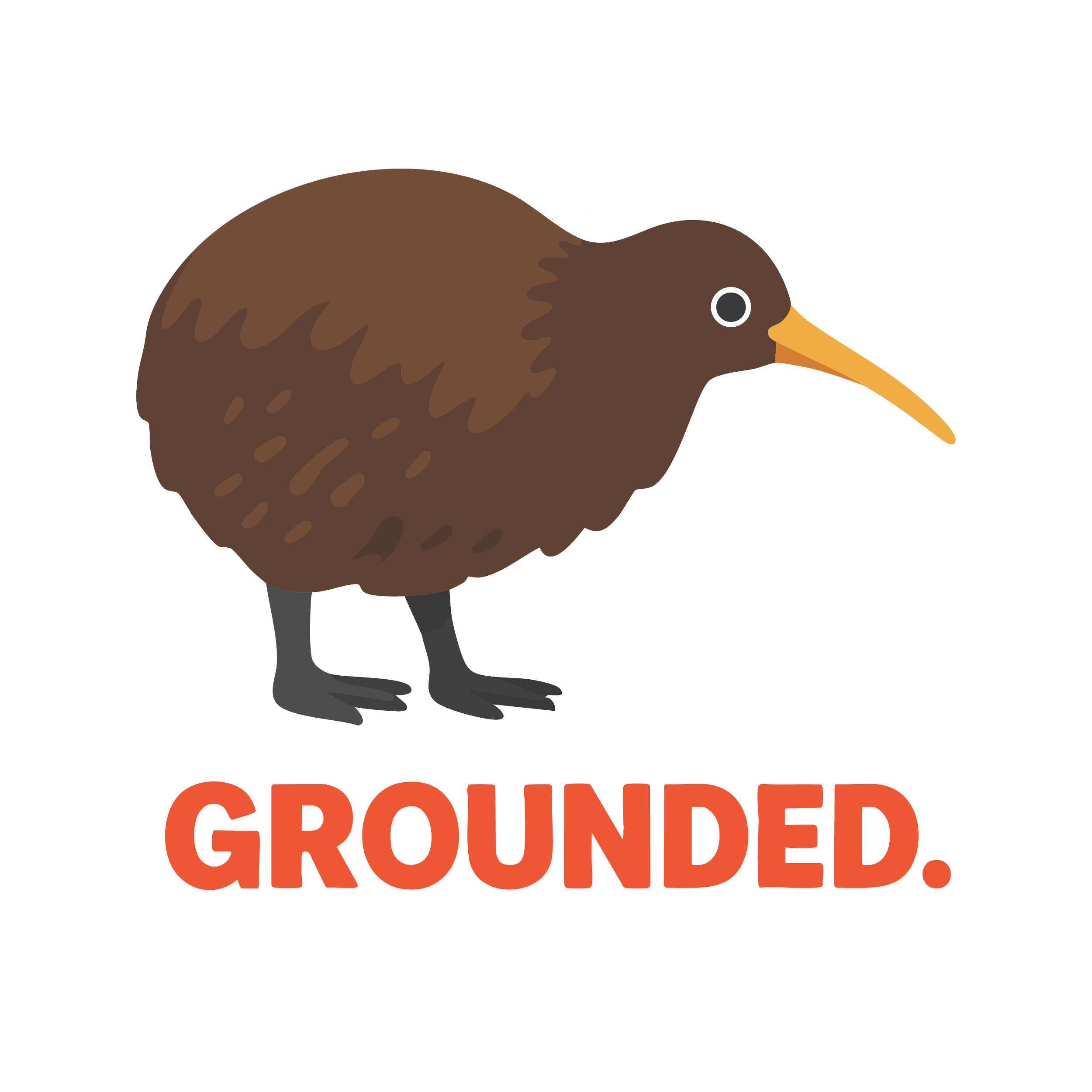
The other half is the question of how a bird, an animal whose entire body plan is famously a flight machine, ever ends up Grounded in the first place, because every flightless bird alive today, from the ostrich to the kiwi to the penguin, is descends from an ancestor that could fly. At some point, each of these lineages let it go. And evolution somehow kept letting it happen. Which brings us to the topic of today's episode.
Okay, but what about birds that can't fly?
To help walk us through this, pun intended, we'll be joined by Dr. Scott Edwards, professor of evolutionary biology at Harvard, longtime ornithologist and a leading voice on the genetics of the evolution of flightless birds.
He spent years working on the genomes of the paleognaths, the deep, ancient lineage that includes ostriches, emus, kiwis, rheas, and the extinct moa, figuring out what actually changes in a bird's DNA when something that evolved to fly doesn't do that anymore. After the break, Scott walks us through the paradox of where flightlessness shows up.
Because the textbook answer is islands without predators and reality isn't so cut and dry. We get into what actually changes in a bird's body and genome when flight goes away. Which turns out to be a much weirder answer than anyone expected.
Stay tuned. Well, welcome back, everyone. I'm really excited to have Scott Edwards with me today. Thanks for joining us, Scott.
Dr. Scott Edwards
It's great to be here.
Dr. Scott Taylor
Yeah. Well, flightless birds. So I think when people think of birds, they invariably think of flight.
What is it about evolution that repeatedly favors the loss of flight?
Dr. Scott Edwards
We're most familiar with this one group of flightless birds called the paleognathes. This is the first group to branch off of modern birds.
So it's a very ancient group, but it includes a lot of species that folks are very familiar with, things like ostriches, emus, kiwis from New Zealand, and the rheas from South America. And that group, you know, often involves finding yourself on an island with no mammalian predators. Just forget about flying.
It's costly to maintain, and they basically turn into big cows, you know, with feathers. Yeah, but there's also some species don't conform to that model, of course, like ostriches in Africa.
They've got lions and all these big, fast mammalian predators. Of course, they're very fast runners themselves, but somehow there they were able to lose flight in the presence of predators.
So that's kind of a head scratcher. And there's lots of other instances of flight, you know, among ducks, some extinct species or songbirds.
And in many of these cases, it is indeed finding yourself in a place without any predators. But still, there's there's examples out there that seem to defy. Defy logic.
Dr. Scott Taylor
Yeah.
Ostriches have always confused me, given that, like, they live with all of these huge predators that are very fast and could, could catch a flightless bird. But yeah, this. Colonizing a place without predators and becoming flightless.
Certainly New Zealand is kind of the poster child of that with all of the different species of moa that are now extinct, but the extant kiwis and kakapos and all of these really interesting birds. When birds become flightless, what do they often gain?
Is there, I mean, with, with a lot of the paleognaths, the big ones that are flightless, they're fast and strong. But are there other syndromes we see with this flightlessness across different species?
Dr. Scott Edwards
It's basically where you put your energy, I think, instead of putting it into maintaining your wings and perhaps maintaining a lean and mean physiology and anatomy.
They vary a lot in their clutch size, for example, but ostriches, they lay these huge clutches and of course they often pull their eggs into one nest. And so I think you just gain a physiological advantage. And if, you know, even Darwin knew that if you, if you don't use it, you lose it.
And if species find themselves just not, not flying very often, they're going to atrophy. But in other species, it's, it's, you know, it's again, a bit of a head scratcher.
Like the kiwis in New Zealand, they sort of famously laid this one really big egg. Yeah. And you wonder, well, why is it so big?
It may be because their ancestors were really big and although their bodies got smaller, maybe their eggs didn't get as small as quickly. It's a really strange situation.
And so they've modified their lifestyle so extremely, they're almost blind, they can't see very well, they can smell very well, but they forage at night. And so this whole flightless syndrome has resulted in a lot of really, really interesting adaptations.
A lot of flightless birds, as you know, you know, they don't have, they have these feathers that are symmetrical essentially all over their body, but also their sort of stubby wings and symmetrical feathers is sort of a smoking gun for having lost flight. Only really flying birds have these sort of asymmetrical feathers that take the air and do great things with it.
Dr. Scott Taylor
Yeah.
And I think one of the interesting things about, like, I guess all flightless birds on the planet evolved from flighted ancestors, as far as we understand it. Right.
So even though we think of ostriches and Emus as these classic, like, flightless creatures, Their ancestors were flighted, which is true of kiwis and even of penguins. And. Yeah, what have we. Have we learned anything recently about that? That has kind of shed light on the evolution of flightlessness more broadly.
Dr. Scott Edwards
You're absolutely right. Everything's coming from something that was flying.
And the common ancestor of modern birds, all 11,800 species, or whatever the number is now, it varies. The common ancestor could fly, at least. So we think. And so I think the real question is sort of how recently did something lose flight?
And so if you look at some groups of flightless birds, like the flightless ducks in the Andes in South America, they seem to have lost flight fairly recently. And if you look at their skeletons, the forelimb bones show sort of very modest changes.
By contrast, the paleognase, including the moa, they show really drastic changes in the forelimb, and so much so in the moa that they've completely lost all of their forelimb elements. There's no humerus, radius, or ulna and no digits at all. So they just lost all that.
And so it sort of depends how long a lineage has been flightless as to what sort of adaptations it might have.
Dr. Scott Taylor
Yeah, that was kind of my next question, like, when flightlessness evolves. And now you've alluded to the fact that it depends on how long ago it evolves, like, what really changes in a bird's body.
So these ducks in South America, is that the steamer ducks you're referring to?
Dr. Scott Edwards
Yes. Yep.
Dr. Scott Taylor
Are they variably flightless, or are they all flightless? I can't remember.
Dr. Scott Edwards
I think. I think just some of them are flightless, not all of them.
Dr. Scott Taylor
Yeah, so that's like a cool case of kind of the recent evolution of flightlessness. And then the moas are this extreme example of, like, I don't even have a humerus or digits anymore.
From a genetics perspective, then, what have you found with respect to flightlessness and the various lineages you've worked on?
Dr. Scott Edwards
Well, we went into this not really knowing what to expect.
Dr. Scott Taylor
Yeah, that's fair.
Dr. Scott Edwards
And as you know, the genome is very complicated, and we just have no idea really what genes might be driving loss of skeletal elements or, for example, the evolution of large body size. And in some ways, you know, this trait called flightlessness, it's sort of a composite trait. Right.
There's lots of aspects to flightlessness, everything from the feathers to changing to the forelimbs to the body size and even the hind limbs. And so there's also hormonal changes that take place. So we didn't really know what to expect.
And you know, I think we do have some clues from model species like people studying limbs in mice or in other vertebrates.
And you know, I think the bias I would say for us and for the rest of the community was probably that while there's some gene that has changed its sequence and is causing loss of forelimbs or something, it turned out that we searched far and wide for changes in the sequence of genes and we weren't actually the first to do this. Others had looked too and basically we can't find anything.
We can't find any genes that have obviously become pseudogenes or lost their function or are just evolving in some strange way. And so that led us to look at the non coding part of the genome which is kind of a black box. It's a very.
We don't even know the language of the non coding regions. With genes it's very straightforward. We've got this triplet code and we can figure out what amino acid is specified.
Whereas with the non coding genome we imagine that much of it might be sort of regulating the genes, the coding regions that might be sort of those switches that turn them up or turn them down and shift their gene expression. But we often don't know how they do that and where they would be relative to the genes that they control.
And so we just took this sort of broad approach of looking at a group of non coding regions that were very conserved across the phylogeny, across lots of birds and even shared with some reptiles and fish and other vertebrates.
And we developed some tools that allowed us to sort of look for signals that might tip us off that those non coding regions were changing in interesting ways, specifically on branches leading to the flightless species in the phylogeny. And that led us to a whole group of these non coding regions which we later learned were this special group of loci called enhancers.
And these are involved with sort of changing the gene expression of genes.
So in the end we learned that it wasn't not the genes themselves that were changing, it was the regulatory regions and switches that shifted genes expression higher or lower. And that was a very cool surprise and one that we didn't really anticipate.
Dr. Scott Taylor
Yeah, it's a really cool finding.
And I think like if we think back to some of the earliest like associations between genotype and phenotype in birds at least it's like snow goose Coloration was clearly like mutations within the melanocortin 1 receptor gene. And those kinds of findings I think made a lot of us think like, oh, it's regularly gonna be that genes are breaking or changing.
And that's what we went out and looked for.
And more and more we're finding it's actually how they're turned up or down, but the gene still functions, which if you fully alter the gene sequence, going back to a functional gene is a really difficult thing that may not actually happen.
But if you're just altering expression of a gene, then there's a lot more that evolution can play with, which is just really fascinating to think about.
Dr. Scott Edwards
Yeah, I agree. It's a really, it's a much more non committal way to change. But you're absolutely right.
Some phenotypes, such as the plumage color were sort of like every time it was, here's the amino acid in the gene that's changing things. And we had found some of those as well when we were looking at like what allows hummingbirds to taste sugary nectar, things like that.
That turned out to be the sequence of a gene, a taste receptor gene. And of course any one gene we know does many different things.
And so if you change that, then you might be committing yourself to all kinds of other changes, which could be disastrous.
Dr. Scott Taylor
Yeah, it's like a core function gene that breaks, then maybe you just don't, you don't develop.
Dr. Scott Edwards
That's right, the egg.
Dr. Scott Taylor
You're toast. Yeah. It's interesting too in the context of it being regulatory changes overall.
Well, one thing I want to say is just like for listeners, the fact that we really don't fully understand a lot of what the genome does, I think is a cool thing.
It means we should keep exploring and trying to figure out what these enhancers do and what all the non coding stuff does, which can actually vary a lot between even individuals within populations, which is pretty cool. But with respect to it being like expression variation and not breaking genes. Yeah. Flightlessness is a syndrome.
Like you said, it's body size, it's wing shape and size, feather stuff. But it's also interesting that even on islands where birds are still flighted, they become like worse at it.
And that process, going from highly vigilant flying in flocks, really good flyer, to being worse flying, not as vigilant again is a syndrome that you could imagine gene expression variation over time might shape and then eventually you end up as a kiwi who is mostly blind. Nostrils at the tip of your beak.
Dr. Scott Edwards
Yeah. And that study that you're referring to, that even Birds that can still fly on islands, they've kind of shifted towards this flightless syndrome.
They become heavier, their wings were shorter and that's really cool. I think maybe it's giving us a glimpse of how things become flightless.
Dr. Scott Taylor
Yeah, yeah, potentially. And I think it's.
I guess again, we look at birds and we think, oh, they're so well adapted for what they do, but don't necessarily think of all the costs associated with flight and the kind of knife's edge that a lot of them live on to have the right body weight to fly, but get enough nutrients to be able to power that flight and that if you don't have all those evolutionary pressures.
Dr. Scott Edwards
Yeah, you're absolutely right. Birds have sacrificed a huge amount even just to fly. I mean, they've looked, they've lost their digits completely. They can't grip anything.
Having to live just on two limbs, two legs and yeah, it's a really. In some ways, it's a tough road. Of course, losing flight doesn't actually get you back any of that stuff.
It's not like suddenly sprout fingers that you can build your nest easier with. But it is remarkable how much sacrifice birds of under. They've lost all their teeth, Right. They can't like chew stuff, so they.
Dr. Scott Taylor
Had to like move them inside and then eat. Yeah, eat stones and grit.
Dr. Scott Edwards
That's right, exactly.
Dr. Scott Taylor
Secondarily grind up their food.
Dr. Scott Edwards
That's right. You know, species are able to accommodate some morphological change with their behavior.
I mean, you can just imagine that first mutant check, like, oh, no, I can't fly anymore. Well, they're going to figure out a way to deal with things behaviorally. And so some of it may not require sort of obvious ecological agent.
A lot of things just, just drift up and it's like, okay, deal with this genetic change.
Dr. Scott Taylor
Yeah. We're studying island gigantism and rosy finches.
Dr. Scott Edwards
Oh, yeah.
Dr. Scott Taylor
And are there differences, consistent differences between these island giant rosy finches and mainland rosy finches.
But the reviewers keep wanting us to write the paper that explains island gigantism, which is like a very harsh paper to write and not what we were trying to do.
Dr. Scott Edwards
Yeah, and that is an interesting question too, but of course, at least my understanding is that it kind of can go both ways. I mean, we've seen things on islands sometimes get really big, but sometimes they get really small. Right?
Dr. Scott Taylor
Yeah, exactly.
Dr. Scott Edwards
And so, and you know, the last paper I read on that was probably in the 90s, but it was like, you know, it's hard to predict whether something Bigger or smaller.
Dr. Scott Taylor
Yeah, but if you're big, you might get small. If you're small, you might get big.
Dr. Scott Edwards
That's right.
Dr. Scott Taylor
No change.
Dr. Scott Edwards
That's right. Maybe it's like progression towards the mean or something.
Dr. Scott Taylor
Yeah, I think there was someone that. There was something I saw that was. Yeah.
Kind of like back towards some standard, but, like, even that, how would you know whether it was predator release or resource availability or in the case of birds, like release from migration, which just get fat and happy and not have to fly?
Dr. Scott Edwards
Well, I think. And one of the coolest examples of this is, what is it? Homo florensis, this thing in the Philippines, this fossil human, which is just extraordinary.
I mean, what. It was like, what, 3ft tall or something?
Dr. Scott Taylor
Yeah, very tiny.
Dr. Scott Edwards
And I think anthropologists argued, is this like some congenital mutation and is this adaptive or did it just sort of happen and. Yeah, it's just. It's really amazing and I think it's kind of cool.
It shows that we humans are just as subject to the vagaries of evolutionary pressures as anything else.
Dr. Scott Taylor
But definitely. Yeah. And I think it's interesting, like, for folks listening, I think we're kind of trained.
If you're not a scientist and you're not thinking about, like, genetic change the way that you and I do, I think because of things like Pokemon and X Men, like, a lot of people think about mutations as hopeful monsters, that there's a mutation, that it's beneficial and it confers some advantage. Like, I don't know, you can move metal if you're magneto or something like that. But the reality is, like, most mutations are negative.
A lot of evolutionary change happens because of random allele frequency changes. Nothing to do with, like, a good mutation.
And it's important to remember that that can all just lead to this, the vagaries of evolutionary biology that we can't go back and watch happen. Which makes it both a cool field to study and also frustrating.
Dr. Scott Edwards
Yeah, you're absolutely right. I mean, I tell my students, if you like precision and predictability, become an engineer.
Dr. Scott Taylor
Yeah, yeah, exactly.
Dr. Scott Edwards
Don't become an evolutionary biologist.
Dr. Scott Taylor
I know, yeah. Have you guys done any of the, like, any Penguin genomics work? I can't remember if.
Dr. Scott Edwards
No, no, we have not. Mostly just because of funding.
It would be very interesting to see if other flightless groups have lost or have changed some of the same gene regulators, some of the same enhancers.
Actually, I do have a postdoc now, Talia Lowy Mary, who is a really great morphologist, and she's Looking at other flightless groups across birds and asking what switches are changing in those lineages. So it'll be very interesting to see whether some of the same switches are changing.
And we know, for example, of course, like penguins, they still have this keel on their sternum because they sort of fly underwater. And this is, I think, another clue. When we find a region of the genome that is correlated with loss of flight.
Well, does that mean it's controlling the forelimb? Is it controlling the sternum and the keel? Is it controlling body size?
We don't really know that until we use some very specific tools that tell us where that non coding region is acting during the developing embryo.
And that's, that's, I think that's really, really important because otherwise we're just speculating as to what a given non coding region might actually be doing.
Dr. Scott Taylor
Absolutely, yeah. So what's next for you guys in terms of studying proximate causes of flightlessness in birds? Are there any.
I mean, I guess you just mentioned what your postdoc is working on with respect to comparing these different lineages that eventually became flightless. But what else do you think is kind of the next step in understanding this?
Dr. Scott Edwards
Yeah, that's a great question. We're kind of just scaling up.
And so it turns out that there's millions of these enhancers all over the genome, and we want to be able to test individual enhancers and see how they might influence development of forelimb growth in embryos of chickens, but also in flightless emus and ostriches and stuff. So, yeah, we're trying to make a flightless chicken, basically.
Dr. Scott Taylor
Oh, interesting.
Dr. Scott Edwards
Yeah.
And we're doing that by being able to screen large numbers of these enhancers, like several hundred at a time, and then finding those ones that look like they might be doing something interesting and then focusing in on those.
So, you know, it's not a trait that we expect to be explained by, you know, one or two, no places in the genome, but there's a. I think there's, there's enough. It's sort of modular in a way, the, the different aspects of flightlessness.
And I think it'll be exciting to look at how, you know, how the contribution of different enhancers results in the whole phenotype.
Dr. Scott Taylor
Yeah. And then, I mean, a lot of people listening might not remember that chickens can fly. We tend to think of them as not being able to, but they can not.
Great. But they fly. Has in artificial selection ever gone towards a fully flightless chicken breed or no?
Dr. Scott Edwards
My guess is that some chicken breeds can't fly, especially those ones with all kinds of feathers on their feet. They can barely even see. Right.
Dr. Scott Taylor
Yeah, that's true.
Dr. Scott Edwards
But yeah, no, look, chickens are not the poster child for flight, but they happen to be a pretty good model system for doing experiments. But yeah, they're sort of a surrogate.
Dr. Scott Taylor
Yeah, but it's cool to. I mean there are lots, there are probably chicken breeds that can't fly just because they're so heavy.
Like, it's not that they don't have the all the other bits that would allow them to fly, but we breed chickens to produce.
Dr. Scott Edwards
That's right.
Dr. Scott Taylor
And so they're breaking. Are disproportionately large.
Dr. Scott Edwards
That's right.
Dr. Scott Taylor
And they can't take off, which I think is true of domestic turkeys. But wild turkeys can fly. Yes, we just tend to. Yeah, but they are good, good model systems for trying to figure out. Yeah.
What these enhancers are doing. And I would imagine like, I mean, as you've been doing this work in other systems, people have found that. Yeah.
In terms of, I guess even in plumage color variation in some systems like the golden winged and blue winged warblers, it seems to be more about how a gene is controlled, not breaking the genes. So this idea that enhancers really matter is broadly relevant for like morphological variation in birds, which I think is really exciting.
Dr. Scott Edwards
That's right.
And I think the whole field is trying to figure out, well, how can we predict what kinds of genes might underlie a specific trait, like maybe physiological or biochemical traits might have genes underlying them, whereas morphological traits might have enhancers. And so that's still a very unanswered question.
Dr. Scott Taylor
So for some of the birds we've been talking about, they're extinct.
Can you talk a little bit about how you actually get DNA out of these old specimens and then what the MOA genome informed that you couldn't get from a living bird or a non extinct species.
Dr. Scott Edwards
I mean, full disclosure, we didn't actually, my lab didn't actually do the DNA isolation on this incredible project, but it was really done by this very talented ornithologist named Alan Baker at the Royal Ontario Museum. And he sadly passed away at the beginning of our collaboration.
But he was originally from New Zealand and it was just a shame that he couldn't see it realized. But we did learn a huge amount of stuff. And what's cool is that the genome is kind of this window into behavior of species.
And so for example, with the genome we could look at things like the Genes that encode receptors in its eyes, in its retinas, so that we can see how moas could see. And we can also study genes encoding receptors in their noses so that we could learn whether they had a good sense of smell or not.
And it turns out that, for example, moas could see in the UV range, in the ultraviolet range. And of course, many birds can see in the ultraviolet. But we didn't know for moas, whether they could.
And in this case, it is a change in a specific gene. One amino acid sort of tells us at position 90 of this shortwave opsin, whether it can see in the UV or not. And indeed it could.
And that's kind of neat to think that, wow, okay, this changes how we think about moabiology. Yeah, for sure. And then we were also able to determine that it had a pretty healthy repertoire of what we call olfactory receptors.
So these are receptors in the nasal membranes that find chemicals and allow species to smell. Diversity of chemical signatures. And this told us that, like kiwis, moas probably had a pretty good sense of smell.
Remarkably, you probably know this. Remarkably, moas are not closely related to kiwis, even though they're both found in New Zealand.
This was something that was discovered by folks at the very beginning of ancient DNA studies on moa Moa. They're, in fact, most closely related to this group of birds called tinamous, which are not even in the old World. They're the New World tropics.
And so it's a completely bizarre biogeographic. Don't ask me how moas got to where they were evolving from tinamous.
But anyway, it's been neat to sort of look into the biology of moas through their DNA, and it's told us a lot about their natural history.
Dr. Scott Taylor
Yeah, they're such fascinating birds.
And it's so interesting, like, when you look at how different MOA species were described from fossils, and then people realized, like, actually moas had extreme sexual size dimorphism, so females were much, much larger than males. But if you're just looking at bones, it takes you a minute to figure out, like, oh, I'm not looking at juveniles.
I'm looking at the males of the same species.
And so there's many different kind of classifications of how many species of moa there actually are, which is fascinating to think about this, like, evolution of size dimorphism for, I think because of resource partitioning, like, be feeding on different things. And I guess it makes sense, too, that they could smell because they were predominantly vegetarian. Right?
Dr. Scott Edwards
That's right.
Dr. Scott Taylor
Sniffing out their good trees to chew.
Dr. Scott Edwards
They ate a lot of insects as well, but yes.
Dr. Scott Taylor
Okay. All right.
So we've reached the part of the show we call that's BS or that's bird stuff, where we give our guests an opportunity to debunk a myth that ruffles their feathers. So, Scott, what do you want to call BS on?
Dr. Scott Edwards
I think I'll just call BS on the supposition that birds are actually not as smart as mammals. If you compare, say, a crow and a rhesus macaque, two very different sized brains.
But actually, a crow or a raven has more neurons in their brain than. And does aeresis and cock. And so this is an example of just. You've got more bang for your buck in a crow brain.
And there's also some really cool evidence recently showing how all of the organization of the bird brain is different from enamels in mammals.
It's kind of this layered thing, and you've got all these folds, as you know, from the human brain, whereas in birds, it's more organized around these nuclei, these sort of song nuclei, and it's got sort of that nuclear organization. Despite that, there's still a ton of similarities in sort of the network structure of birds and mammals. And so that's.
There's just a lot of evidence that birds brains are as complex and can be compared in many ways to those of mammals.
Dr. Scott Taylor
I love that. Yeah. We had Alex Kiselnik on talking about New Caledonian crows, and he also wanted people to stop using that term as a negative thing, bird brain.
And I appreciate you providing the context of the actual morphological and neuron variation that would suggest that just because it doesn't look as complicated as a mammal brain does not mean it is not as complicated.
Dr. Scott Edwards
That's right.
Dr. Scott Taylor
As a mammal brain. That's right, yeah.
Dr. Scott Edwards
I mean, if you look at a bird brain, it's like a zebra. It's very smooth. It doesn't have any of those. And we tend to associate those wrinkles with, like, Einstein's brain.
Dr. Scott Taylor
I think when we see that, we're like, oh, yes, humans are smart.
Dr. Scott Edwards
Right.
Dr. Scott Taylor
God, our bias. Well, thanks so much for joining us on the podcast today, Scott. I really appreciate it.
These flightless birds are just, like, fascinating to think about, and all this extra context is awesome. So thanks for taking the time.
Dr. Scott Edwards
Thanks very much, Scott.
Dr. Scott Taylor
Birds are dinosaurs, and around here, we like our snacks. So we end each episode with a dinosaur nugget.
Today's nugget is every flightless bird alive today from the kiwi to the ostrich to the emperor penguin. Descended from an ancestor that could fly. Flight was the default. Walking is the upgrade. Which means the ostrich isn't a bird that failed to keep up.
It's a bird that somewhere along the way, looked at the sky and said, yeah, I'm good. That's a wrap on this week's episode. Okay, but what about birds that can't fly?
If you like this episode, leave us a rating or review or like and subscribe. We'll catch you next time. Bye. Okay, But... Birds is hosted by Scott Taylor, with production and creative by Zach Karl.
Transcript Disclosure
This transcript was generated using AI-assisted transcription and may contain errors or omissions. Please refer to the audio or video episode for the most accurate representation. -
All audio, video, and images in this episode are either original to Okay, But... Birds (© Okay Media, LLC) or used under license/permission from the respective rights holders. Bird media from the Macaulay Library is used courtesy of the Cornell Lab of Ornithology as follows:
Falkland Steamer-Duck audio contributed by Maurice A. E. Rumboll, ML4114
Great Tinamou audio contributed by David L. Ross, Jr., ML57320
Release Date: May 28, 2026Flight is the thing we associate most with birds, so what does it mean when a lineage gives it up? Dr. Scott Edwards, Harvard, joins Scott to unpack how flightlessness evolves, why it keeps happening across the bird family tree, and what the genome reveals about how a bird loses the ability to fly.